Thursday, February 25, 2016

Canoe Creek Trail race April 9


The fourth annual “Dirty Kiln Trail Races at Canoe Creek State Park” brought to you by Allegheny Trailrunners, Inc. will be Saturday, April 9th, 2016! Trail runners will have a choice to run the 5-mile course up Moore’s Hill and around the lake. The half-marathon course will go around the park a second time but on a more hilly and challenging half-marathon course!  Both courses have a lot of variety of trails from wide paths, winding singletrack, stream crossings and mud… lots of mud.

The half-marathon starts at 9:00am while the 5-milers start at 9:15am.

Wednesday, February 10, 2016

Bunny Blitz 5k Trail Run & Walk

MARCH 26 @ 9:30 AM - 12:00 PM

PENNSYLVANIA FURNACE, PA

The annual Bunny Blitz 5K Cross Country Trail Run takes place in the beautiful Spruce Creek Valley on Easter Saturday.  It is a challenging, beautifully laid out private course that meanders through the woods of the beautiful Spruce Creek Valley just 11 miles or so outside of State College, PA.
This year the race will be benefiting the YMCA of Centre County and the Northern Blair County Recreational Center.
Come join us and support these local community organizations.

RACE START/FINISH/PARKING

Harpster Ball Field
Ballfield Rd.
PA Furnace, PA

Tuesday, December 29, 2015

State College YMCA Indoor Triathlon

JANUARY 31, 2016 @ 8:00 AM - 10:00 AM

1ST ANNUAL INDOOR TRIATHLON
10 MINUTE POOL SWIM + 10 MINUTE INDOOR CYCLE RIDE + 10 MINUTE TREADMILL RUN = TOTAL DISTANCE

$15 PER PERSON
REGISTER ONLINE NOW! (SPACE IS LIMITED)

Join the YMCA this January and get your spring fitness jump started!
Need to get the snow drum blues kicked out of your system? Come join us on Sunday morning, January 31st and try out this new winter twist. While the weather outside may be a little bit frightful, inside the Y, the pool is a nice 80 degrees. Start the event with a 10 minute indoor 25 yard pool swim. After a 3-4 minute transition period, jump on one of our Schwinn Indoor Cycles (w/ computer) beside the pool and spin your heart out for another 10 minutes. Immediately following your ride, you’ll have another 3-4 minutes for T2 to head over to the fitness center where you’ll hop on one of our Precor treadmills and finish with a 10 minute run. We’ll add up your distances from each event to come up with your total distance to rank among all the other competitors.

Wednesday, September 16, 2015

Building a Better Bike Cadence

A common mistake by a lot of new cyclists and triathletes is to ride in too big a gear with low cadence ranges of 75-80rpms. Every athlete is different and we all have our own cadence “sweet spot."

By Brad Seng
D3 Multisport.com Coach
When I first started doing triathlons and focused bike training, I kept hearing about this funny acronym “RPM”. I had no idea what it meant. Nor did I understand the direct relationship between efficient biking and the ability to run effectively off the bike. I was a match burner, surging my way over rolling terrain and using big gears on the climbs. Fortunately, I had a good coach who was able to get me to understand the importance of a smooth pedal stroke.

A common mistake by a lot of new cyclists and triathletes is to ride in too big a gear with low cadence ranges of 75-80rpms. Every athlete is different and we all have our own “sweet spot” when it comes to that magical cadence range. Generally speaking though, upper 80s to low-mid 90 rpms is an ideal range. Of course this will vary some with terrain. The key is to be able to bike efficiently while not spinning too high or mashing too big a gear. This takes practice and awareness when biking, but over time you should be able to find your sweet spot. 

During certain times of the year I like to dose my athletes with specific sessions to improve efficiency and the ability to dial in the cadence ranges. One thing to focus on is eliminating any “dead spots” within the pedal stroke. This usually occurs at the six or twelve o’clock position in the pedal stroke. I also encourage athletes to imagine they are cleaning mud off the bottom of their cycling shoe with a scraping motion instead of pulling up when completing the pedal stroke. During easy recovery rides really focus on this technique and a higher cadence if you find yourself on the mashing side of things. If you feel like you are spinning too fast, make a gearing adjustment to a harder gear. Over time, you will know progress is being made as you notice you are able to ride a bigger gear at the same cadence ranges. Cycling with a more consistent cadence in the correct range along with proper energy output will enable you to bike faster and preserve your legs for the run.

Here are a few of my favorite sessions to improve bike cadence:
Note, ' = minutes, " = seconds, WU = Warm-up, 
Spin-ups: Warm-up well for 15’. Next complete the following sequence two times – 5’ at 100rpms, 5’ at 110 rpms, 3’ at 120rpms and 1’ at 130rpms. Recovery is 3’ easy spinning between rep and 5’ between blocks. Remainder of ride easy spinning at comfortably high cadence. 

ILDs: Isolated leg drill. This is best done using a home trainer for safety reasons. WU well for 15’ and then complete the following sequence 8-10 times – 30’’ biking w/left leg only, 30’’ w/right leg only, 1’ easy spinning with both legs. When doing the single leg work, unclip the non-working foot. Easy spinning for the remainder of time. This session will really help identify any dead spots with the single leg work.

Varied Cadences: Warm-up well for 15-20’ and then complete the following sequence 3-4 times through: 2’ high cadence, 2’ normal cadence, 2’ big gear w/lower cadence, 2’ easy. Remainder of ride easy spinning.

Train Well,
Brad Seng
Head Coach - University of Colorado Triathlon Team
Assistant Coach – Team USA ITU World Championships Chicago
Coach - D3 Multisport
Certified Sports Nutritionist

Tuesday, July 21, 2015

Feel Good on the Bike and Ride More!

How to Fit a Road Bicycle


This article is focused on road bike fitting and not bike sizing. Often these two descriptions become intertwined but they are completely different.   With that said, fitting a road bicycle works best when you start with the right size bike; or at a minimum a bicycle that is close enough to your right size. 

Sizing a road bicycle is not as complicated as you may have been led to believe, in part due to the reality that a good bike fit actually has little to do with the bicycle per se. Fitting a road bicycle comes down to the contact points (connection points) between the cyclist and their bicycle. These five connection points are: right and left foot, the pelvis and right and left hands. So even if your bike is not the correct “size,” as long as you get the connection points in the ideal place you can still achieve a good and comfortable bike fit. 

A proper bike fit has more to do with the saddle, handlebars, brake levers and hoods, stem and, most importantly, shoes, cleats and pedals.


Read the rest of this article here!

Friday, July 10, 2015

Friendly Competition

Looking to test your fitness? The Hollidaysburg YMCA has a duathlon (run, bike, run) and triathlon (swim, bike, run) on August 1 at Canoe Creek.

Here is a link with more details if you are interested. Canoe Creek Race Series

Monday, July 6, 2015

3 Stretches and Massage Techniques for cyclists

Any repetitive movement can put stress on your body, and cycling is certainly that – if you pedal at 90 rpm, that’s 5,400 revolutions an hour, so it’s understandable that from time to time you might feel the odd ache.
images
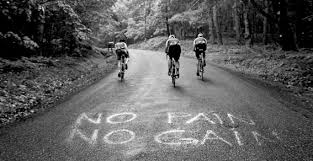
DOMS – delayed onset muscle soreness – are a normal sign that your body is being forced to adapt, and as the saying goes ‘No Pain, No Gain’, but sharp pains, or those that feel out of the ordinary or are persistent are quite another thing.
Injuries are often the result of tight muscles elsewhere – so for example, fatigue and tightness in your hips or glutes can extend to pain in the hamstrings and calves if not treated with some careful TLC. When large muscles, such as the glutes, are not able to complete their work, the load is placed upon smaller muscles, and that can lead to injury.
The best form of defense is to stretch and massage muscles before they begin to really suffer. We’ve taken a look at 3 areas that need regular TLC, and how to care for them.
However, if you are struggling with regular discomfort from cycling, it’s a very good idea to have a bike fit – as all 3 of the below (and more!) can be down to an ill fitting bike – easily fixed with a tape measure, plum lines, spirit levels, and a little know how.

1) Glutes/Pirafirmis

Your glutes are made up of your gluteus minimus, gluteus medius, gluteus maximus and tensor fasciae latae. The gluteus maximus is the largest of all, and is the most obvious – making up most of your bum cheek – it does a lot of  the work in cycling. Very close to it, is your Piraformis, a very tiny muscle that is actually used to rotate your leg outwards. When this muscle gets tight, or stressed, it can cause quite a bit of pain – even tightening up and putting pressure on the sciatic nerve, creating a condition called Piraformis Syndrome, where pain runs down the back of the entire leg.
I’ve struggled with a knotty Piraformis on multiple occasions and can vouch for two treatment methods:
> Rolling on a tennis ball/lacrosse ball: This sounds bizarre, and I’ll admit it’s somewhat (very) painful – but it absolutely works. Simply place the ball on the ground, and sit on it, placing all your body weight on one side, then roll. When you find the right spot (Piraformis Syndrome can also be called Wallet Syndrome – X marks the spot right where your back pockets sit) you’ll know about it. Don’t be too brutal, as too much massage can cause more damage, take it easy and do this little and often if you can.

> Piraformis Stretch: Lie on your back, with both knees bent. Lift your left leg, and place the ankle on your right knee – this should result in a stretch right through your left glutes. If this isn’t strong enough, place both hands behind the thigh of your right leg, and raise the leg off the ground. Do this on both sides – remember pain in the left can be as a result of tightness in the right, and vice versa.

2) IT Band

The IT band – or Iliotibial band – runs alongside your outer thigh, right from the hip to your knee. Knee pain is one of the most common complaints cyclists suffer from, and there are very many causes – but one of them is a tight IT band, pulling on the knee cap.
Regular TLC for the IT band can help to prevent this sort of knee pain:
> Use a foam roller along the outer thigh:  If you don’t have a foam roller, a tennis ball, deodorant can, or even a bottle of water filler with ice will do the job.  To do this, lie on one side with your foam roller below your knee, and gently roll so that you are resting on your hip. Do this slowly, and if you find a point that is more painful, stop there for 10 seconds or so to help the muscle release. If the IT band is tight, this can be painful, but stick at it as it is worth it.
> Stretch the IT band: Stand with your legs crossed, your right leg behind your left. Lean to your left, holding on to a railing/chair/door if you need to keep your balance. If you don’t feel this stretch strongly enough, lift your left hand above your head. If you still struggle to feel the stretch, lean forwards to touch your toes (or get as close as you can).

3) Back pain

Many cyclists spend a lot of time with their backs curved, and their arms reaching forwards for the handlebars. This isn’t a natural position, and to make matters worse, many of us are compounding the problem with desk jobs that have us leaning over computers during the day, too.
A great way to reverse the forward bend is to counter it with a backwards bend. When you get off the bike, place your hands on your bum, and lean back to look at the sky. If need be, you can nonchalantly whistle and pretend to be bird watching.
Another great way to stretch your back out is to lie on your front, with your hands on the floor either side of you. Push up from this position, keeping your hips on the ground – and extend as far as you can – you should feel a stretch all the way down your lower back. My ballet teacher used to make us then lift our feet up to tough the crown of our heads – but this isn’t entirely necessary for most cyclists!
Remember – these are stretches and massage techniques to help prevent problems caused by tight muscles – if you are already experiencing pain that is out of the ordinary for you, see a physiotherapist or osteopath, and get a bike fit!