Tuesday, July 21, 2015

Feel Good on the Bike and Ride More!

How to Fit a Road Bicycle


This article is focused on road bike fitting and not bike sizing. Often these two descriptions become intertwined but they are completely different.   With that said, fitting a road bicycle works best when you start with the right size bike; or at a minimum a bicycle that is close enough to your right size. 

Sizing a road bicycle is not as complicated as you may have been led to believe, in part due to the reality that a good bike fit actually has little to do with the bicycle per se. Fitting a road bicycle comes down to the contact points (connection points) between the cyclist and their bicycle. These five connection points are: right and left foot, the pelvis and right and left hands. So even if your bike is not the correct “size,” as long as you get the connection points in the ideal place you can still achieve a good and comfortable bike fit. 

A proper bike fit has more to do with the saddle, handlebars, brake levers and hoods, stem and, most importantly, shoes, cleats and pedals.


Read the rest of this article here!

Friday, July 10, 2015

Friendly Competition

Looking to test your fitness? The Hollidaysburg YMCA has a duathlon (run, bike, run) and triathlon (swim, bike, run) on August 1 at Canoe Creek.

Here is a link with more details if you are interested. Canoe Creek Race Series

Monday, July 6, 2015

3 Stretches and Massage Techniques for cyclists

Any repetitive movement can put stress on your body, and cycling is certainly that – if you pedal at 90 rpm, that’s 5,400 revolutions an hour, so it’s understandable that from time to time you might feel the odd ache.
images
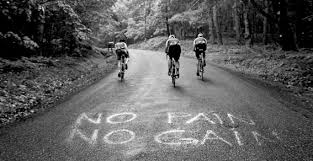
DOMS – delayed onset muscle soreness – are a normal sign that your body is being forced to adapt, and as the saying goes ‘No Pain, No Gain’, but sharp pains, or those that feel out of the ordinary or are persistent are quite another thing.
Injuries are often the result of tight muscles elsewhere – so for example, fatigue and tightness in your hips or glutes can extend to pain in the hamstrings and calves if not treated with some careful TLC. When large muscles, such as the glutes, are not able to complete their work, the load is placed upon smaller muscles, and that can lead to injury.
The best form of defense is to stretch and massage muscles before they begin to really suffer. We’ve taken a look at 3 areas that need regular TLC, and how to care for them.
However, if you are struggling with regular discomfort from cycling, it’s a very good idea to have a bike fit – as all 3 of the below (and more!) can be down to an ill fitting bike – easily fixed with a tape measure, plum lines, spirit levels, and a little know how.

1) Glutes/Pirafirmis

Your glutes are made up of your gluteus minimus, gluteus medius, gluteus maximus and tensor fasciae latae. The gluteus maximus is the largest of all, and is the most obvious – making up most of your bum cheek – it does a lot of  the work in cycling. Very close to it, is your Piraformis, a very tiny muscle that is actually used to rotate your leg outwards. When this muscle gets tight, or stressed, it can cause quite a bit of pain – even tightening up and putting pressure on the sciatic nerve, creating a condition called Piraformis Syndrome, where pain runs down the back of the entire leg.
I’ve struggled with a knotty Piraformis on multiple occasions and can vouch for two treatment methods:
> Rolling on a tennis ball/lacrosse ball: This sounds bizarre, and I’ll admit it’s somewhat (very) painful – but it absolutely works. Simply place the ball on the ground, and sit on it, placing all your body weight on one side, then roll. When you find the right spot (Piraformis Syndrome can also be called Wallet Syndrome – X marks the spot right where your back pockets sit) you’ll know about it. Don’t be too brutal, as too much massage can cause more damage, take it easy and do this little and often if you can.

> Piraformis Stretch: Lie on your back, with both knees bent. Lift your left leg, and place the ankle on your right knee – this should result in a stretch right through your left glutes. If this isn’t strong enough, place both hands behind the thigh of your right leg, and raise the leg off the ground. Do this on both sides – remember pain in the left can be as a result of tightness in the right, and vice versa.

2) IT Band

The IT band – or Iliotibial band – runs alongside your outer thigh, right from the hip to your knee. Knee pain is one of the most common complaints cyclists suffer from, and there are very many causes – but one of them is a tight IT band, pulling on the knee cap.
Regular TLC for the IT band can help to prevent this sort of knee pain:
> Use a foam roller along the outer thigh:  If you don’t have a foam roller, a tennis ball, deodorant can, or even a bottle of water filler with ice will do the job.  To do this, lie on one side with your foam roller below your knee, and gently roll so that you are resting on your hip. Do this slowly, and if you find a point that is more painful, stop there for 10 seconds or so to help the muscle release. If the IT band is tight, this can be painful, but stick at it as it is worth it.
> Stretch the IT band: Stand with your legs crossed, your right leg behind your left. Lean to your left, holding on to a railing/chair/door if you need to keep your balance. If you don’t feel this stretch strongly enough, lift your left hand above your head. If you still struggle to feel the stretch, lean forwards to touch your toes (or get as close as you can).

3) Back pain

Many cyclists spend a lot of time with their backs curved, and their arms reaching forwards for the handlebars. This isn’t a natural position, and to make matters worse, many of us are compounding the problem with desk jobs that have us leaning over computers during the day, too.
A great way to reverse the forward bend is to counter it with a backwards bend. When you get off the bike, place your hands on your bum, and lean back to look at the sky. If need be, you can nonchalantly whistle and pretend to be bird watching.
Another great way to stretch your back out is to lie on your front, with your hands on the floor either side of you. Push up from this position, keeping your hips on the ground – and extend as far as you can – you should feel a stretch all the way down your lower back. My ballet teacher used to make us then lift our feet up to tough the crown of our heads – but this isn’t entirely necessary for most cyclists!
Remember – these are stretches and massage techniques to help prevent problems caused by tight muscles – if you are already experiencing pain that is out of the ordinary for you, see a physiotherapist or osteopath, and get a bike fit!

Tuesday, June 30, 2015

Carbon Fiber vs Aluminum vs Steel vs Titanium

BY  /  TUESDAY, 10 DECEMBER 2013 
What is the real difference between carbon fiber vs aluminum vs steel vs titanium… What are the Pros and Cons of each material?

Carbon Fiber

Most high-end bikes are made from this material and for good reason:

Pros

  • Lightest material
  • Strongest material
  • Stiffest material
  • Best shock absorption
  • Infinitely mouldable to any design
  • Flexible where it needs to be
  • Won’t rust or corrode like steel

Cons

  • Expensive
  • Not all carbon is created equal
  • Can crack/fracture
  • Strength and stiffness depend on design

Aluminum

Many entry level bikes are made from aluminum because it can be made stiff and light enough for a great ride.

Pros

  • Light
  • Strong
  • Stiff
  • Mouldable
  • Great for climbing and sprinting
  • Won’t rust or corrode
  • Less expensive than carbon fiber

Cons

  • Harsh on rough roads
  • Can fatigue over time (Leads to overbuilding which adds to weight)
  • Not easily repaired
  • Weak joints

Steel

Steel will last a life time. It is also the easiest to repair, making it a great bike for touring.

Pros

  • Inexpensive
  • Strong
  • Flexes enough for a soft ride
  • Most durable of all the materials
  • Lively feel
  • Easy to work with and repair

Cons

  • Heavy
  • Rust/corrosion
  • Flexes too much for racing

Titanium

Titanium is a metal that takes aspects from aluminum and steel… better shock absorption that aluminum but not quite as light.

Pros

  • Bullet proof
  • Its density is between that of steel and aluminum which makes it stiff but shock absorbing
  • Lively feel
  • Shock absorbing
  • Does not corrode

Cons

  • Expensive
  • Difficult to make aero shapes due to welding considerations
  • Difficult to repair
  • Stiffness is traded for lightweight

My Preferences…

I have at least one bike made out of every material. I use carbon fiber bikes the most; but here are the exceptions:
Winter riding - I use an aluminum frame as I do not want to ruin my more expensive carbon fiber frames, but still want a bike that climbs fast.
Downhill Mountain Bike – I like my titanium frame. I feel indestructible going downhill.
Touring – I would use a steel frame due to the ease of repairs and dependability.
I realize not everyone is fortunate enough to have such a wide selection of bikes and price point is always a factor. If you are just getting into cycling then most of the time a carbon fiber frame is not necessary. My first bike was aluminum and it was fantastic. I still have it… and I still ride it.
Each material has different qualities keep them in mind when you go to purchase your next ride.

Monday, June 15, 2015

2016 Liv City Bikes are Cute, Comfy, and Fun

This article is from Bicycling Magazine

Brand new Flourish and Suede step-throughs offer a stylish ride for around-town cruising


GLORIA LIU


Liv, Giant’s women’s brand, has launched two new urban bikes for women: The Suede and the Flourish. 


Both the Suede and the Flourish feature step-through frames built with Giant’s most affordable grade of aluminum, and chromoly steel forks. Frame geometry on both bikes enable the rider to sit in an upright position, with feet farther forward than on a typical road or mountain bike. This also allows the rider to put her feet flat on the ground while she’s in the saddle, rather than having to reach with her toes. Sherman says this position provides confidence in urban riding situations where there may be constant start-stopping, and is intended to be more comfortable for riders who may be newer to cycling. That may be true, but there's also a broader appeal: I spend a lot of time on road and mountain bikes and I enjoyed the feeling of sitting upright and just cruising along. It felt a little like riding one of those motorized shopping carts and it definitely contributed to our giggles en route to happy hour.
The Suede features a single ring up front and a Shimano derailleur (7- or 8-speed, depending on the model you get), with an easy-to-use twist shifter. All models also have a chain cover to protect your jeans and boots from grease, a leather saddle by Selle Royale, leather grips, and a sweet little bell. The Suede 2 is $425; the Suede 1 ($565) gets upgrades that include a rack, fenders, and a basket. As an add-on, Liv also sells colorful, patterned cloth baskets that feature handles and drawstring closures, so you can take them off the bike and use them as a large handbag. They bike comes in five colors, including this eye-catching Coral option with turquoise fenders.

The Flourish comes with more gearing options, with three rings up front and a 7-speed Shimano IGH rear derailleur. The Flourish 2 ($620) that Sherman showed us comes with an oversize wicker basket that’s big enough to hold a full daypack and a cushioned leather spring saddle that helps smooth the ride. The swept handlebar enables you to hold on while sitting up (though the steering takes a little getting used to, it’s quicker than a flat bar), and fenders shield you from road splash. And because sometimes you don’t always remember to bring a light for your commute, or you end up staying out later than you think (like we did yesterday), I was excited to find that the Flourish 2 has a built-in lighting system: There's an integrated rear blinky light and a headlight powered by a dynamo hub that lit my way to the bar and then home. Pricing starts at $360 for the Flourish 4 (no lighting, fenders, or chain guard) and goes up to $620 for the Flourish 2. Several color options are available, too.

Monday, June 8, 2015

Rothrock TrailMix June 13


Happy Valley Biking is proud to present for the 4th year, the Rothrock TrailMix, on the second Saturday in June - June 13, 2015. The race will begin at the base of Tussey Mountain with the course running on the beautiful trails in Rothrock State Forest.

The objective of our race is to (1) provide for a shorter race course in the Rothrock area - 19 mile "Short Course", (2) provide a race course that uses some of the most technical trails in Rothrock State Forest - 36 mile (MASS/IMBA Epic) course, and (3) to give back to our biking community and local trail system and trail volunteer groups.

Both courses of this race are designed for the intermediate to advanced technical skill level rider. This is not a good race for a novice or beginner.  The trails in Rothrock are naturally rocky and require excellent bike handling skills.

Back by popular demand, the Dice Run category in the Short Course is for those mountain bike enthusiasts that are more of the gambler as opposed to the racer. So if you're not into racing, but into riding and supporting a great event, come on out and ride! Prizes will be awarded for the Dice Run category based on the roll of the dice.

The Rothrock TrailMix is a Mid-Atlantic Super Series (MASS) Endurance Event and an IMBA Epic Ride Route. Proceeds will benefit the local trails and trail system in Rothrock State Forest, as well as the local volunteer groups who help maintain the multi-use system.

All participants receive swag - the earlier you register, the more you get! Awards and prizes to top finishers in all classes!

Food and STRAUB Beer will be provided to participants at the finish line!